
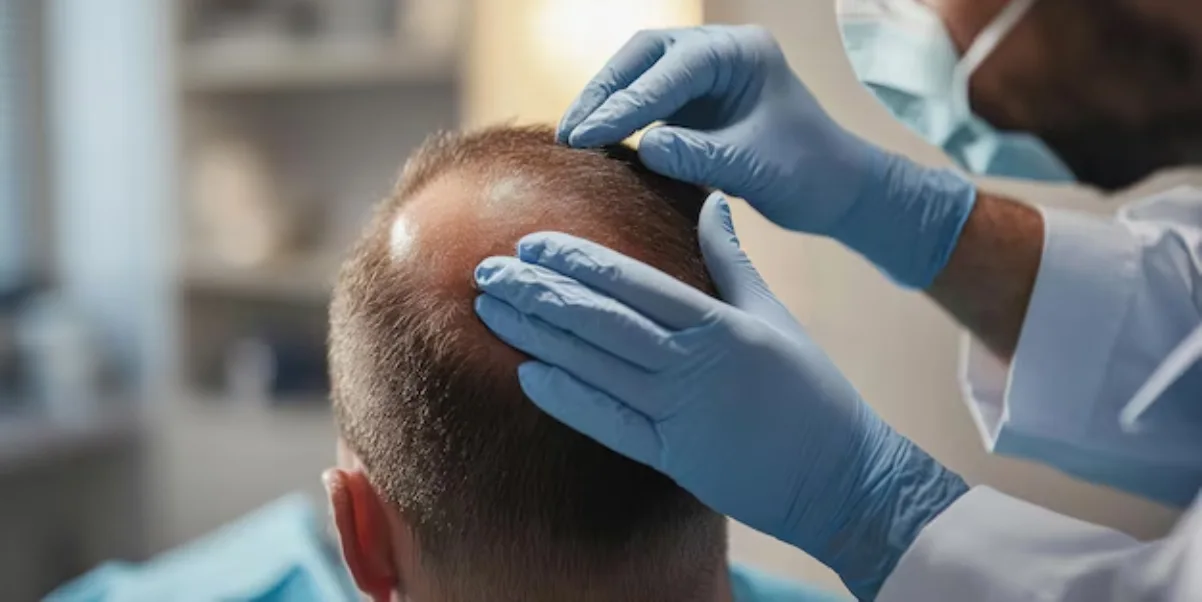
One of the most common questions I hear from patients considering a hair transplant isn't about the procedure itself, it's about what happens afterwards. How much will it hurt? When can I go back to work? Why does my hair look like it's falling out again a few weeks in?
Recovery is where most of the anxiety lies, mostly because expectations don't match reality. So here's an honest, week-by-week look at what actually happens after a hair transplant (FUE or FUT), based on what I see in practice.
Day 0 to Day 3: Immediate Aftercare
This window is about protecting the grafts, which are at their most fragile right after the procedure.
What to do:
- Sleep with your head elevated at roughly 45 degrees for the first 3-4 nights (an extra pillow or a recliner works well) to reduce swelling
- Take prescribed pain relief and anti-inflammatory medication on schedule, not just when discomfort starts
- Apply cold compress near the forehead/eyes (not directly on the graft sites) if swelling appears
- Avoid touching, scratching, or resting your head against anything — pillowcases, headrests, helmets
- Do not wash your hair until your surgeon specifically clears you to (usually day 8-10)
- Avoid bending forward or lying flat — this increases blood flow to the scalp and worsens swelling
Watch for: unusual bleeding that doesn't stop with light pressure, or fever — contact your surgeon immediately if either occurs.
Day 8 to Day 10: First Washes and Scab Care
Your surgeon will usually start you on a gentle washing protocol around day 8-10, typically using a prescribed shampoo or a saline/diluted solution poured gently over the scalp rather than direct tap pressure.
What to do:
- Follow the exact washing technique shown to you — usually pouring solution gently and patting (never rubbing) to loosen scabs gradually over several days
- Never pick at scabs manually, even if they feel loose — let them shed on their own during washing
- Keep using a soft towel, patting dry rather than rubbing
- Continue sleeping elevated through this period
- Avoid direct sunlight on the scalp; wear a loose cap if you need to step out (avoid anything tight-fitting)
Activity restrictions: no gym, swimming, or activities causing heavy sweating yet.
Day 10 to Day 14: Scab Shedding
Most scabs shed naturally by this point, usually during your regular gentle washing. Some pinkness at the donor and recipient areas may still be visible but continues to fade.
What to do:
- Continue the washing routine as advised, now usually with slightly more normal water pressure once your surgeon confirms
- You can typically resume light daily activity and non-strenuous work
- Still avoid direct sun exposure, saunas, and swimming pools (chlorine and scalp sensitivity don't mix well yet)
Week 2 to Week 4: The Shedding Phase
Many of the transplanted hairs shed during this window — this is expected and doesn't mean the transplant has failed. The follicle stays in place under the skin; only the hair shaft above the surface sheds before regrowth begins later.
What to do:
- Resume normal hair washing with regular (gentle) shampoo once cleared
- Light exercise (walking) is usually fine by week 2-3; hold off on heavy weightlifting, running, or contact sports until your surgeon confirms, typically around week 3-4
- Continue avoiding direct, prolonged sun exposure on the scalp
- Alcohol and smoking are best avoided through at least this period, as both can affect blood flow and healing at the graft sites
Month 1 to Month 3: Settling In
Visually, this is the quietest period — the scalp looks similar to the shedding phase, with little visible change. This doesn't mean nothing is happening; follicles are entering their growth cycle beneath the surface.
What to do:
- By this stage, most patients can resume full gym activity, swimming, and normal grooming routines, but confirm timing with your surgeon based on your specific procedure
- Haircuts around the donor area are usually fine after about 4-6 weeks; check before any scalp treatments, coloring, or chemical products
- Keep follow-up appointments — this is when your surgeon checks graft take and flags any concerns early
Month 3 Onward: Growth and Maturation
Fine new hair typically starts appearing from month 3, thickening progressively through months 6-9, with final texture and density settling in over 12-18 months.
What to do:
- Maintain a consistent hair-care routine as advised (this may include recommended shampoos or, in some cases, supportive treatments your surgeon prescribes)
- Protect the scalp from excessive sun exposure long-term, not just during recovery
- Keep any recommended follow-up visits during this window — it's the best time to address any thin patches early rather than waiting for the full 18 months
Quick Reference: When You Can Resume What
| Activity | Typical Timeline* |
| Light Desk Work | 2–3 days |
| Washing Hair (Per Protocol) | Day 8–10 |
| Driving | 2–3 days |
| Light Walking | Week 1–2 |
| Gym / Heavy Exercise | Week 3–4 |
| Swimming / Sauna | Week 4+ |
| Haircut Near Donor Area | Week 4–6 |
| Sun Exposure Without Protection | After full scab shedding, with ongoing caution |
*These are general timelines — your surgeon's specific instructions for your procedure always take priority.
When to Contact Your Surgeon
Mild swelling, tenderness, itching, and scabbing are all normal. Reach out promptly if you notice spreading redness, warmth, or discharge at graft sites, fever, unusual or worsening pain, or bleeding that doesn't settle with gentle pressure.
The Bottom Line
The procedure gets most of the attention, but recovery is where the real work happens. Sticking to the washing protocol, respecting activity restrictions, and not panicking during the shedding phase all directly affect how well the final result turns out. When in doubt at any stage, a quick check-in with your surgeon is always better than guessing.
Dr. (Col.) Vijay Langer is a US-trained double board certified plastic and cosmetic surgeon based in Delhi with 35+ years of experience, and a gold medalist (MCh, DNB) from AFMC Pune. This article is intended for general educational purposes and does not replace personalised medical advice. Always follow your own surgeon's specific post-operative instructions.